
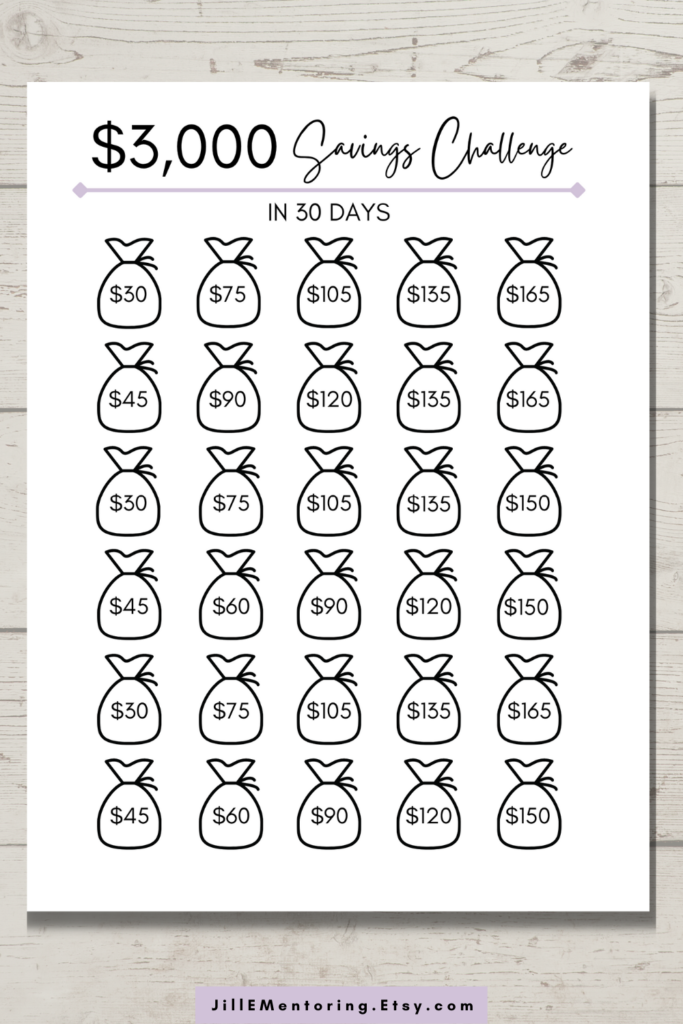
You’re not alone if you’ve ever looked at your bank balance and thought, “I need to save more—but how?” Whether you’re living paycheck to paycheck, drowning in small daily expenses, or just tired of feeling financially stuck, the idea of saving $1000 in 30 days might sound impossible. But it’s not. With focus, discipline, and smart daily choices, this challenge is absolutely achievable—even on a tight budget. This isn’t about extreme frugality or selling your belongings. It’s about making intentional shifts in spending, cutting waste, and building momentum toward real financial freedom. If you’re ready to take control, this step-by-step guide will show you exactly how to save $1000 in 30 days—without sacrificing your sanity.
Why the $1000 in 30 Days Challenge Works
The $1000 in 30 days challenge isn’t just a gimmick—it’s a proven strategy to jumpstart your savings and reshape your financial habits. Most people fail at saving because they aim too low or give up after a week. This challenge creates urgency, accountability, and visible progress. When you break $1000 into daily goals—just over $33 per day—it suddenly feels manageable. You’re not trying to save a lump sum; you’re making small, consistent choices that add up fast. Plus, the psychological boost of hitting a big milestone in one month builds confidence and momentum for long-term success.
This challenge also forces you to examine your spending habits. You’ll quickly identify where your money leaks out—whether it’s daily coffee runs, unused subscriptions, or impulse online shopping. Once you see the patterns, you can stop the bleeding and redirect that cash into your savings. And because the timeline is short, you stay motivated. There’s no room for procrastination. Every day counts.
Step 1: Audit Your Current Spending
Before you can save $1000 in 30 days, you need to know where your money is going. Start by tracking every dollar you spend for one week. Use a notebook, a budgeting app, or a simple spreadsheet. Categorize expenses: groceries, transportation, dining out, entertainment, bills, and miscellaneous. Don’t judge—just observe. You’ll likely be surprised by how much small purchases add up.
For example, buying a $5 coffee every weekday costs $100 a month. That’s $33 right there—your first day’s savings goal. Or maybe you’re paying $15/month for a streaming service you haven’t used in weeks. Canceling it saves $45 over three months—but if you pause it for 30 days, you’ve freed up cash immediately. The key is awareness. Once you see the numbers, you can make informed decisions about what to cut, reduce, or eliminate.
How to Track Spending Effectively
Choose a method that fits your lifestyle. If you’re tech-savvy, apps like Mint, YNAB (You Need A Budget), or PocketGuard sync with your accounts and auto-categorize spending. If you prefer simplicity, a daily log in a notebook works just as well. The goal isn’t perfection—it’s consistency. Review your spending every evening for 7 days. At the end of the week, tally each category and identify your top 3 money drains.
Common culprits include eating out, subscription services, impulse buys, and convenience purchases (like bottled water or pre-cut fruit). Once you’ve identified these, you can create a targeted plan to reduce or eliminate them. Remember, this isn’t about deprivation—it’s about reallocating money from low-value spending to high-value savings.
Step 2: Set a Daily Savings Target
Breaking $1000 into daily chunks makes the goal feel less overwhelming. $1000 ÷ 30 days = $33.33 per day. That’s your daily savings target. But don’t stress about hitting exactly $33.33 every single day. Some days you’ll save $50; others, only $10. The key is consistency and making up the difference. If you save $20 on Monday, aim for $47 on Tuesday to stay on track.
Use a simple tracker—a notebook, a whiteboard, or a free printable—to mark off each day’s progress. Visualizing your success builds motivation. You can also set up a separate savings account or envelope labeled “$1000 in 30 Days” to physically separate your challenge funds from everyday spending. Watching that balance grow is incredibly rewarding.
Daily Savings Strategies
Here are practical ways to hit your $33 daily goal:
- Skip one daily purchase: No morning latte? That’s $5–$7 saved.
- Cook at home: Eating out once costs $15–$25. Cooking saves most of that.
- Use cashback apps: Apps like Rakuten, Ibotta, or Honey give you money back on purchases you’d make anyway.
- Sell unused items: Declutter your closet, garage, or phone. Even $10–$20 a day from small sales adds up.
- Walk or bike instead of driving: Save on gas, parking, and wear-and-tear.
Mix and match these tactics based on your lifestyle. The goal is to find $33 worth of savings each day without feeling deprived.
Step 3: Cut Recurring Expenses
Recurring expenses—subscriptions, memberships, automatic payments—are silent budget killers. You might not even notice them until you add them up. Start by listing every monthly subscription: streaming services, gym memberships, meal kits, software tools, magazines, and apps. Then ask: Do I use this? Do I need this? Can I pause it for 30 days?
For example, if you have Netflix, Hulu, Disney+, and HBO Max, that’s $50+/month. Pausing two of them for 30 days saves $25–$30. Cancel a $15/month gym membership you haven’t used in months? That’s another $15. Even small subscriptions—like a $5/month app or $10/month music service—add up. If you cut five $10 subscriptions, you’ve freed up $50 in one month.
Negotiate or Downgrade Bills
Don’t stop at canceling. Call your service providers and negotiate. Internet, cable, phone, and insurance companies often offer discounts for loyal customers or promotional rates. Say, “I’m trying to reduce my monthly expenses. Are there any lower-cost plans available?” Many will offer $10–$20 off per month just to keep you.
You can also downgrade. Switch from a premium phone plan to a basic one. Use a cheaper internet speed. Bundle services. These small changes can save $30–$50/month—directly boosting your $1000 goal.
Step 4: Reduce Food Costs
Food is one of the easiest places to save big. The average American spends over $300/month on dining out and groceries. With smart planning, you can cut this by 30–50%. Start by meal planning. Every Sunday, plan your meals for the week and make a shopping list. Stick to it. Avoid shopping when hungry—it leads to impulse buys.
Cook in bulk. Make large batches of soup, chili, or pasta and freeze portions. This reduces cooking time and prevents last-minute takeout. Buy generic brands—they’re often just as good as name brands but cost 20–30% less. Shop sales and use coupons. Stores like Aldi, Lidl, or Walmart offer quality groceries at lower prices.
Cut Dining Out
Dining out is the fastest way to blow your budget. Even $15 lunches add up to $300/month. Challenge yourself to eat out only once a week—or not at all. Pack your lunch, bring snacks, and make coffee at home. If you do eat out, choose cheaper options: food trucks, happy hours, or split meals. Every dollar saved goes straight to your $1000 goal.
And don’t forget beverages. Soda, alcohol, and specialty drinks are expensive. Stick to water, tea, or homemade coffee. You’ll save $2–$5 per day easily.
Step 5: Earn Extra Income
Saving $1000 in 30 days isn’t just about cutting expenses—it’s also about increasing income. Even small side gigs can make a huge difference. Think of skills or assets you can monetize. Can you tutor, freelance, or sell handmade items? Do you have a car, camera, or spare room?
Popular side hustles include:
- Gig economy jobs: Deliver food (DoorDash, Uber Eats), drive (Uber, Lyft), or run errands (TaskRabbit).
- Sell items online: Use Facebook Marketplace, eBay, or Poshmark to sell clothes, electronics, or furniture.
- Rent out space: List a spare room on Airbnb or rent your parking spot.
- Freelance work: Offer writing, graphic design, or virtual assistant services on Fiverr or Upwork.
Even earning $20–$30 extra per day can cover your daily savings goal. And the best part? This money goes directly into your challenge fund—no temptation to spend it.
Quick Cash Opportunities
Look for one-time opportunities. Participate in paid surveys (Swagbucks, Survey Junkie), rent out your car (Turo), or do local tasks like dog walking or yard work. These aren’t long-term solutions, but they can generate $50–$100 in a weekend—perfect for boosting your savings fast.
Step 6: Avoid Impulse Purchases
Impulse buying is the enemy of saving. It’s easy to justify small purchases—“It’s only $10”—but they add up fast. To combat this, implement a 24-hour rule: wait a full day before buying anything non-essential. This cooling-off period helps you distinguish between wants and needs.
Unsubscribe from marketing emails and avoid browsing online stores when bored. Use cash instead of cards—it’s harder to spend physical money. And keep a “waiting list” for purchases. Write down what you want to buy and revisit it in a week. If you still want it, consider buying it. Often, the urge passes.
Mindful Spending Habits
Ask yourself before every purchase: “Do I need this? Will it improve my life? Can I afford it without derailing my savings goal?” This simple question stops mindless spending. Also, set spending limits for categories like entertainment or clothing. Once you hit the limit, stop buying.
And celebrate small wins. Saved $20 by skipping a movie? Treat yourself to a free activity—a walk in the park, a home-cooked meal, or a favorite podcast. Reinforce positive behavior without spending money.
Step 7: Stay Motivated and Accountable
The hardest part of the $1000 in 30 days challenge isn’t the math—it’s staying consistent. Motivation fades, life gets busy, and old habits creep back in. To stay on track, find an accountability partner. Share your goal with a friend, family member, or online community. Check in weekly to report progress and encourage each other.
Use visual reminders. Put a sticky note on your mirror: “$1000 in 30 Days.” Track your progress on a chart or app. Celebrate milestones—$250, $500, $750—with non-monetary rewards. And remind yourself why you’re doing this: financial security, less stress, freedom to make choices.
Overcome Common Obstacles
Life happens. You might have an unexpected expense or a social event that tempts you to spend. Don’t quit. Adjust your plan. If you spend $50 on a birthday dinner, save an extra $17 the next day to stay on track. Flexibility keeps you moving forward.
And remember: this challenge is about progress, not perfection. Missing a day doesn’t mean failure. Get back on track the next day. Every dollar saved brings you closer to your goal.
Key Takeaways
The $1000 in 30 days challenge is more than a savings goal—it’s a mindset shift. It teaches you to value your money, question your spending, and take control of your financial future. By auditing expenses, setting daily targets, cutting recurring costs, reducing food spending, earning extra income, avoiding impulse buys, and staying accountable, you can realistically save $1000 in one month.
This isn’t about extreme sacrifice. It’s about making smarter choices every day. And the skills you build—budgeting, tracking, prioritizing—will serve you long after the 30 days are up. You’ll carry these habits into future financial goals, from building an emergency fund to paying off debt or investing.
FAQ
Is it really possible to save $1000 in 30 days on a low income?
Yes—if you’re strategic. It may require cutting more expenses or earning extra income, but it’s achievable. Focus on high-impact changes like canceling subscriptions, cooking at home, and selling unused items. Even $20–$30 saved daily adds up to $600–$900. Combine that with a small side gig, and you can reach $1000.
What if I can’t save $33 every day?
That’s okay. Some days you’ll save more; others, less. The key is consistency and making up the difference. If you save $10 one day, aim for $56 the next. Use a tracker to monitor your progress and adjust as needed. The goal is to average $33 per day over 30 days.
Should I pause my emergency fund to do this challenge?
No. If you already have an emergency fund, keep it intact. This challenge is about building savings, not depleting them. If you don’t have an emergency fund, consider using part of your $1000 as a starter fund. But don’t sacrifice long-term security for a short-term goal.
Conclusion
Saving $1000 in 30 days isn’t just possible—it’s empowering. It proves that with focus and discipline, you can take control of your finances, no matter your income. This challenge isn’t about perfection; it’s about progress. Every dollar saved is a step toward financial freedom, less stress, and more choices.
Start today. Track your spending, set your daily goal, and make one small change. Skip the coffee, cook dinner, or sell an old jacket. Small actions lead to big results. In 30 days, you won’t just have $1000—you’ll have a new mindset, stronger habits, and the confidence to tackle any financial goal. Your future self will thank you.