
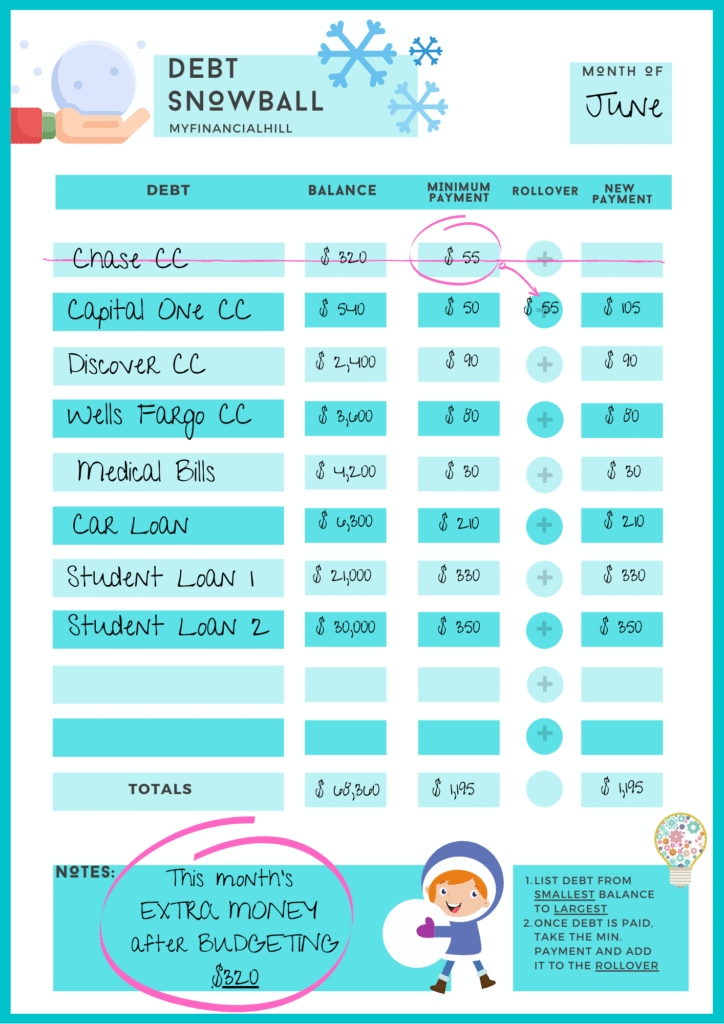
If you’re drowning in debt and tired of feeling like your payments are going nowhere, the debt snowball method might be your lifeline. This simple, psychology-backed strategy helps you pay off debt faster by focusing on one balance at a time—starting with the smallest. Unlike other methods that prioritize interest rates, the debt snowball method emphasizes quick wins to build momentum and motivation. It’s not just about math—it’s about behavior. And for many people, that makes all the difference.
The core idea is straightforward: list all your debts from smallest to largest balance, make minimum payments on all of them, and put any extra money toward the smallest debt until it’s gone. Then, roll that payment into the next smallest debt, creating a “snowball” effect. As each debt disappears, your cash flow improves, and your confidence grows. But does it actually work? The answer depends on your financial habits, emotional needs, and long-term goals.
How the Debt Snowball Method Works Step by Step
The debt snowball method is built on a simple, repeatable process that anyone can follow—no financial degree required. It starts with a clear picture of what you owe.
First, gather all your debt accounts: credit cards, personal loans, medical bills, student loans, car payments, or any other balances with interest. Don’t include your mortgage unless you’re specifically targeting it. Next, list them in order from the smallest balance to the largest, regardless of interest rate.
For example:
– Credit Card A: $500
– Medical Bill: $1,200
– Personal Loan: $3,000
– Car Loan: $8,000
– Student Loan: $15,000
Once your list is ready, commit to making at least the minimum payment on every debt each month. This keeps you in good standing and avoids penalties. Then, take any extra money you can free up—from cutting expenses, side gigs, or tax refunds—and apply it entirely to the smallest debt on your list.
Let’s say you have $300 extra each month after minimums. You’d pay that full $300 toward Credit Card A until it’s paid off. Once that’s gone, you take the total amount you were paying on that card (minimum + extra) and add it to the payment for the next smallest debt—Medical Bill. Now, instead of just the minimum, you’re paying significantly more, accelerating progress.
This cycle continues. Each time a debt is eliminated, its payment amount gets “snowballed” into the next one. Over time, you’re applying larger and larger payments to fewer debts, which speeds up payoff and reduces total interest paid—even if you’re not targeting the highest interest rate first.
Why the Debt Snowball Method Builds Momentum
One of the biggest reasons the debt snowball method works is psychological. Paying off debt isn’t just a numbers game—it’s an emotional journey. When you’re stressed about money, small victories matter more than you think.
The method is designed to give you quick wins. Eliminating a $500 credit card balance in two months feels far more rewarding than chipping away at a $10,000 loan for a year with little visible progress. These early successes boost confidence and reinforce discipline. You start believing, “I can do this,” and that mindset shift is powerful.
Behavioral economists call this the “progress principle”—people are more motivated when they see tangible progress. The debt snowball method leverages this by front-loading small victories. Even if the math slightly favors the debt avalanche method (which targets high-interest debt first), the snowball’s emotional payoff often leads to better long-term results.
Consider Sarah, a teacher with $12,000 in credit card debt across four cards. She started with a $300 balance on a store card. By paying it off in six weeks, she gained a sense of control. That win pushed her to stay consistent, and within 18 months, she was debt-free. “Paying off that first card was like unlocking a level in a game,” she said. “It made everything else feel possible.”
Debt Snowball vs. Debt Avalanche: Which Is Better?
The debt snowball method is often compared to the debt avalanche method, which prioritizes debts with the highest interest rates first. On paper, the avalanche method saves more money in interest over time. But real life isn’t always about paper.
Let’s look at an example. Suppose you have:
– Credit Card A: $2,000 at 24% APR
– Personal Loan: $5,000 at 8% APR
The avalanche method would have you pay off Credit Card A first because of the high interest. The snowball method would have you pay off the $2,000 card first—same in this case. But if the personal loan were $1,500 and the credit card $2,000, the snowball would target the loan first, even though it has a lower interest rate.
In that scenario, the avalanche saves more in interest. But the snowball may lead to faster behavior change. Studies, including one from the Harvard Business Review, show that people who use the snowball method are more likely to stick with their plan and become debt-free. Why? Because motivation matters more than marginal interest savings for most people.
The key difference is focus:
– Debt avalanche: Optimizes for cost (saves more money long-term).
– Debt snowball: Optimizes for motivation (builds habits and confidence).
Neither is universally “better.” It depends on your personality. If you’re disciplined and motivated by numbers, the avalanche might suit you. If you need quick wins to stay on track, the snowball is likely the better choice.
Real-Life Success Stories: Does the Debt Snowball Method Actually Work?
The proof is in the results. Thousands of people have used the debt snowball method to eliminate tens of thousands in debt. Take Mark and Lisa, a couple in their 30s with $28,000 in combined credit card and medical debt. They started with a $400 medical bill and paid it off in four months. That win gave them the confidence to tackle the next one.
Within two years, they were completely debt-free—and had started an emergency fund. “We didn’t make six figures,” Mark said. “But we stuck to the plan because we saw progress every month.”
Another example is James, a freelance graphic designer with irregular income. He used the snowball method to pay off $16,000 in credit card debt. By focusing on the smallest balances first, he created predictable wins even when his income fluctuated. “Some months I could only pay the minimum,” he said. “But knowing I was still moving forward kept me from giving up.”
These stories aren’t outliers. Financial coaches like Dave Ramsey, who popularized the method, report that clients using the snowball are more likely to complete their debt payoff journey than those using other strategies. The reason? Consistency. When you see results, you’re more likely to keep going.
Common Mistakes to Avoid When Using the Debt Snowball Method
Even the best strategy can fail if you don’t follow it correctly. Here are common pitfalls to watch out for.
One mistake is not listing all your debts. It’s easy to overlook small balances like old gym memberships or forgotten store cards. But every debt counts. Missing one can derail your progress and make your plan feel unfair.
Another error is not committing to extra payments. The snowball only works if you consistently apply surplus money to your smallest debt. If you treat that extra cash as “fun money” instead of debt payment, you’ll stall. Treat your debt payoff like a non-negotiable bill.
Some people also give up too soon. The first debt might take a few months, but the real momentum builds later. If you don’t see results in the first month, don’t quit. Progress compounds over time.
Finally, avoid taking on new debt while using the snowball method. It’s counterproductive. If you pay off a $500 card and then charge $600 the next month, you’re back to square one. Stay disciplined. Use cash or debit for purchases until you’re fully debt-free.
How to Start the Debt Snowball Method Today
You don’t need a perfect budget or a windfall to begin. The debt snowball method works with any amount of extra cash—even $20 a month helps.
Start by listing all your debts. Use a spreadsheet, a notebook, or a free app like Undebt.it or EveryDollar. Include the creditor, balance, minimum payment, and interest rate.
Next, order them from smallest to largest balance. Ignore interest rates for now—focus only on the amount owed.
Then, review your monthly budget. Look for areas to cut back: subscriptions, dining out, impulse buys. Even small savings add up. Redirect that money to your smallest debt.
If your income allows, consider a side hustle—freelancing, selling unused items, or gig work—to boost your payment power. Every extra dollar accelerates your progress.
Finally, automate your payments. Set up automatic minimum payments for all debts to avoid late fees. Then, manually send the extra amount to your target debt each month. Automation reduces the chance of forgetting or skipping a payment.
Remember: consistency beats intensity. Paying $50 extra every month is better than paying $500 once and then stopping.
Key Takeaways: Is the Debt Snowball Method Right for You?
The debt snowball method is more than a repayment strategy—it’s a behavior-changing tool. It works because it aligns with how people think and feel about money. Here’s what to remember:
– It focuses on paying off debts from smallest to largest balance, regardless of interest rate.
– It builds momentum through quick wins, boosting motivation and confidence.
– It’s ideal for people who need emotional reinforcement to stay on track.
– It may cost slightly more in interest than the avalanche method, but it leads to higher success rates.
– It requires discipline, consistency, and a commitment to avoid new debt.
If you’ve tried other methods and failed, or if you’re overwhelmed by multiple debts, the snowball method offers a clear, achievable path forward. It’s not about being perfect—it’s about progress.
FAQ: Common Questions About the Debt Snowball Method
Does the debt snowball method save money on interest?
Not always. Since it doesn’t prioritize high-interest debt, you may pay slightly more in interest compared to the avalanche method. However, the psychological benefits often lead to faster payoff and greater success, which can outweigh the extra cost.
Can I use the debt snowball method with student loans?
Yes. Include all non-mortgage debts in your list, including student loans. If you have a small private loan alongside larger federal loans, pay off the smaller one first to build momentum.
What if I have no extra money to pay toward debt?
Start by cutting expenses or increasing income. Even $10 extra per month helps. The key is consistency. Once you free up cash, apply it to your smallest debt and keep going.
Conclusion: Take Control of Your Debt Today
Debt doesn’t have to control your life. The debt snowball method offers a practical, psychology-based approach to becoming debt-free. It’s not the fastest way mathematically, but it’s one of the most effective for real people with real struggles.
By focusing on small wins, building momentum, and staying consistent, you can eliminate debt and regain financial freedom. Start today—list your debts, commit to a plan, and take that first step. Every payment brings you closer to a life without financial stress. You’ve got this.