
Struggling to make ends meet each month? You’re not alone. Many single individuals face the challenge of stretching every dollar while trying to save for the future. A monthly budget template for single person is your secret weapon to regain control, reduce stress, and build lasting financial habits. This practical guide walks you through creating a personalized budget that fits your lifestyle, helps you track spending, and sets you on the path to financial freedom—without feeling deprived or overwhelmed.
Why Every Single Person Needs a Monthly Budget
Living alone means you’re responsible for 100% of your expenses—rent, utilities, groceries, transportation, and more. Without a clear plan, it’s easy to overspend, miss savings goals, or live paycheck to paycheck. A well-structured monthly budget gives you clarity. It shows exactly where your money goes and where you can cut back.
More than just numbers on a spreadsheet, a budget is a financial roadmap. It helps you prioritize needs over wants, avoid debt, and build an emergency fund. For single individuals, especially those new to managing their own finances, a budget provides structure and peace of mind.
Imagine knowing at the start of each month how much you can spend on dining out, entertainment, or shopping—without guilt. That’s the power of a personalized monthly budget. It turns financial uncertainty into confidence.
What Makes a Great Monthly Budget Template for Single Person?
Not all budget templates are created equal. The best ones are simple, flexible, and tailored to your unique situation. A solid monthly budget template for single person should include the following core components:
- Income Tracking: All sources of monthly income, including salary, side gigs, or freelance work.
- Fixed Expenses: Regular bills like rent, utilities, insurance, and loan payments.
- Variable Expenses: Costs that change monthly, such as groceries, gas, and entertainment.
- Savings Goals: Emergency fund, retirement, vacation, or other financial targets.
- Debt Payments: Credit cards, student loans, or personal loans.
- Spending Categories: Customizable sections for personal spending habits.
A good template also allows room for adjustments. Life changes—your budget should too. Whether you get a raise, move to a new city, or start a side hustle, your template should adapt without requiring a complete overhaul.
Step-by-Step Guide to Creating Your Monthly Budget
Step 1: Calculate Your Monthly Income
Start by listing all sources of income after taxes. Include your primary job, freelance work, rental income, or any side hustles. If your income varies, use an average from the past three to six months. This gives you a realistic baseline.
For example, if you earn $3,500 from your job and $300 from tutoring, your total monthly income is $3,800. Be honest and accurate—this number sets the foundation for your entire budget.
Step 2: List Your Fixed and Variable Expenses
Fixed expenses stay the same each month. These include rent or mortgage, car payments, insurance premiums, and subscription services like Netflix or Spotify. Write them down with exact amounts.
Variable expenses fluctuate. Groceries, dining out, gas, clothing, and entertainment fall into this category. Review your bank and credit card statements from the past few months to estimate averages. If you spent $400, $380, and $420 on groceries, use $400 as your monthly target.
Step 3: Set Realistic Savings Goals
Saving money is non-negotiable. Even small amounts add up over time. Aim to save at least 10–20% of your income. Break this down into specific goals:
- Emergency Fund: $500–$1,000 initially, then build to 3–6 months of expenses.
- Retirement: Contribute to a 401(k) or IRA, even if it’s just $50/month.
- Short-Term Goals: Vacation, new laptop, or holiday gifts.
If 20% feels too high, start with 5% and increase it gradually. The key is consistency, not perfection.
Step 4: Choose a Budgeting Method That Works for You
Different people thrive with different approaches. Here are three popular methods single individuals use:
- 50/30/20 Rule: 50% for needs, 30% for wants, 20% for savings and debt.
- Zero-Based Budgeting: Every dollar has a job. Income minus expenses equals zero.
- Envelope System: Allocate cash to envelopes for each spending category.
The 50/30/20 rule is beginner-friendly and flexible. For example, on a $3,800 income: $1,900 for needs, $1,140 for wants, and $760 for savings. Adjust based on your priorities and cost of living.
Step 5: Track and Adjust Monthly
A budget isn’t set in stone. Review it every month. Did you overspend on dining out? Did you save more than expected? Use this insight to tweak your categories.
Apps like Mint, YNAB (You Need A Budget), or even a simple Google Sheet can help you track spending in real time. The goal is awareness, not punishment. If you go over in one category, reduce spending elsewhere to balance it out.
Common Budgeting Mistakes Single People Make (And How to Avoid Them)
Even with the best intentions, budgeting pitfalls can derail your progress. Here are common mistakes and how to sidestep them:
Ignoring Small Expenses
Those $5 coffee runs and $10 streaming subscriptions add up. A daily $5 coffee is $150/month—enough to fund a weekend getaway. Track every expense, no matter how small, for at least one month to see the full picture.
Not Planning for Irregular Expenses
Car repairs, medical bills, or holiday gifts don’t happen every month, but they will happen. Create a “miscellaneous” or “annual expenses” category and set aside a small amount each month. Divide annual costs by 12 and save that amount monthly.
Being Too Restrictive
A budget that feels like a punishment won’t last. Allow room for fun. If you love concerts or weekend trips, include a “personal enjoyment” category. Deprivation leads to burnout and overspending later.
Skipping the Review
Setting up a budget and forgetting about it is a recipe for failure. Schedule a monthly check-in—maybe the first Sunday of each month—to review spending, update goals, and celebrate progress.
Free Monthly Budget Template for Single Person (Download & Customize)
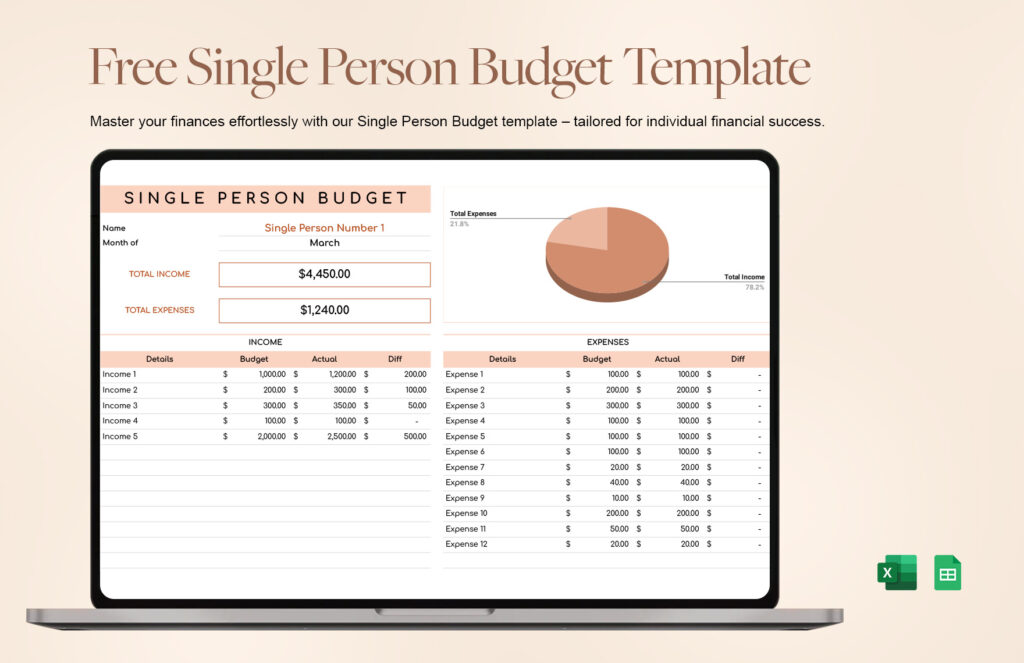
Ready to get started? Here’s a simple, ready-to-use monthly budget template for single person you can copy into Google Sheets or Excel:
Sample Budget Breakdown (Based on $3,800 Monthly Income)
- Income: $3,800
- Fixed Expenses:
- Rent: $1,200
- Utilities (electric, water, internet): $180
- Car Payment: $300
- Insurance (health, car): $250
- Phone: $50
- Subscriptions: $40
- Variable Expenses:
- Groceries: $400
- Gas/Transportation: $150
- Dining Out: $200
- Entertainment: $100
- Personal Care/Clothing: $120
- Savings & Debt:
- Emergency Fund: $300
- Retirement (IRA): $200
- Credit Card Payment: $150
- Total Expenses: $3,640
- Remaining: $160 (can go to savings, fun money, or debt)
This template is flexible. Adjust amounts based on your income and lifestyle. The key is balance—covering essentials while still enjoying life.
How to Save Money as a Single Person on a Budget
Budgeting isn’t just about tracking spending—it’s about finding ways to save. Here are practical, realistic tips to stretch your dollars further:
Cook at Home More Often
Eating out is convenient but expensive. A $15 lunch adds up to $450/month if you do it three times a week. Plan simple meals, buy in bulk, and prep on weekends. You’ll save money and eat healthier.
Use Public Transportation or Carpool
If you live in a city, consider ditching the car. Public transit, biking, or walking cuts gas, insurance, and maintenance costs. If you need a car, carpool with coworkers or use ride-sharing apps for occasional trips.
Negotiate Bills and Subscriptions
Call your internet or phone provider and ask for a lower rate. Many companies offer discounts for loyal customers. Cancel unused subscriptions—do you really need three streaming services?
Shop Smart
Use coupons, shop sales, and buy generic brands. Apps like Ibotta or Rakuten give cash back on everyday purchases. Avoid impulse buys by waiting 24 hours before making non-essential purchases.
Automate Savings
Set up automatic transfers to a savings account on payday. “Pay yourself first” before spending on anything else. Even $25/month grows over time with compound interest.
Building Better Financial Habits Over Time
A budget is more than a tool—it’s a habit. The more you use it, the more natural it becomes. Start small. Track your spending for one week. Then one month. Celebrate small wins, like staying under budget on groceries or saving an extra $50.
Over time, you’ll develop a healthier relationship with money. You’ll think twice before making unnecessary purchases and feel proud of your progress. Financial habits take time to build, but each step forward counts.
Remember, budgeting isn’t about restriction—it’s about freedom. Freedom from debt, stress, and uncertainty. It’s about having the money to say yes to opportunities, travel, or simply peace of mind.
Key Takeaways
- A monthly budget template for single person helps you track income, control spending, and save consistently.
- Start by listing all income and expenses, then choose a budgeting method that fits your lifestyle.
- Include savings and debt payments as non-negotiable expenses.
- Review and adjust your budget monthly to stay on track.
- Small changes—like cooking at home or canceling unused subscriptions—add up over time.
- Consistency and awareness are more important than perfection.
FAQ: Monthly Budget for Single Person
How much should I save each month as a single person?
Ideally, aim to save 10–20% of your monthly income. If that’s not possible, start with 5% and increase it gradually. Even $20 a week builds a $1,040 emergency fund in a year.
What if my income varies from month to month?
Use an average of your last three to six months of income. Base your budget on the lowest month to avoid overspending. Save extra during high-income months to cover leaner ones.
Can I still enjoy life while budgeting?
Absolutely. A good budget includes money for fun, hobbies, and social activities. The goal is balance—meeting your needs, saving for the future, and enjoying the present without guilt.
Conclusion: Start Your Budget Today
Taking control of your finances doesn’t require a finance degree or a six-figure salary. It starts with one simple step: creating a monthly budget template for single person that works for you. Whether you use a spreadsheet, an app, or pen and paper, the act of planning your spending is transformative.
You don’t have to be perfect. You just have to start. Open a new document tonight. List your income. Track your expenses. Set one small savings goal. That’s it. Small actions lead to big changes.
Imagine looking back in six months and seeing how far you’ve come—less debt, more savings, and the confidence that comes with financial control. That future starts now. Take the first step today.