
If you’ve ever felt overwhelmed by bills, struggled to save, or wondered where your paycheck disappears each month, you’re not alone. Many people live paycheck to paycheck, not because they earn too little, but because they lack a clear plan for their money. The good news? A simple, proven budgeting method can change that. The 50 30 20 rule budget is one of the easiest and most effective ways to take control of your finances—without spreadsheets, apps, or financial jargon.
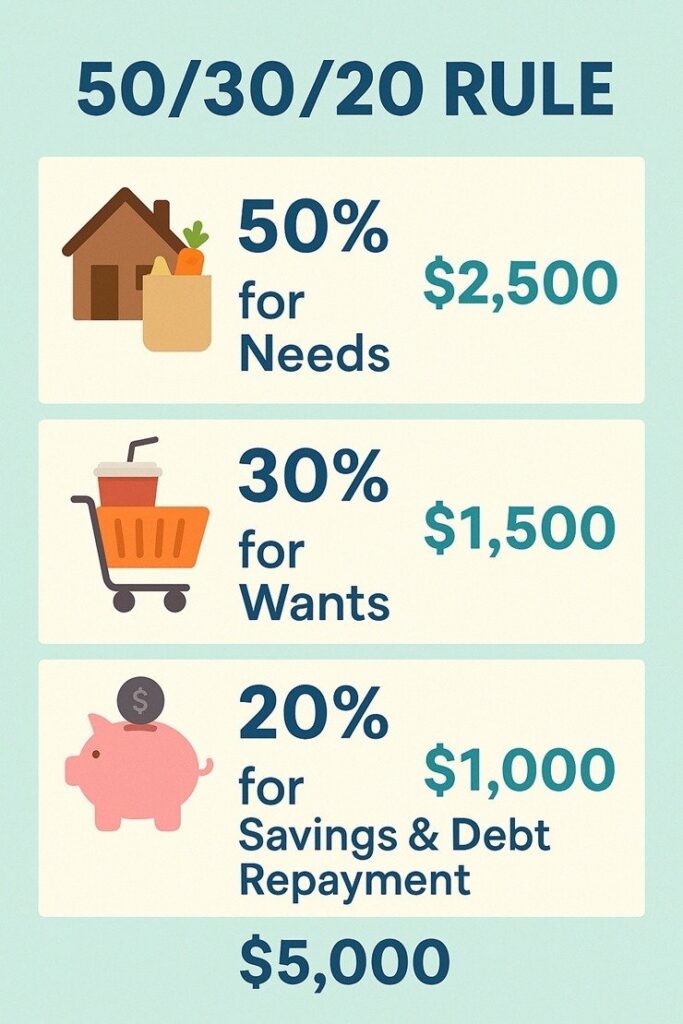
This rule breaks your after-tax income into three clear categories: 50% for needs, 30% for wants, and 20% for savings and debt repayment. It’s flexible, realistic, and designed for real people with real lives. Whether you’re just starting your financial journey or trying to get back on track, the 50 30 20 rule offers a balanced approach to managing your money, reducing stress, and building a stronger financial future.
Why the 50 30 20 Rule Works for Real People
The 50 30 20 rule was popularized by U.S. Senator Elizabeth Warren in her book All Your Worth: The Ultimate Lifetime Money Plan. It’s not about extreme frugality or complex calculations. Instead, it’s about creating a sustainable balance between living today and preparing for tomorrow.
Unlike rigid budgeting systems that demand perfection, this rule allows room for enjoyment while still prioritizing financial health. It recognizes that life isn’t just about paying bills—it’s also about experiences, comfort, and personal fulfillment. By allocating specific portions of your income, you avoid the common pitfalls of overspending or neglecting savings.
This method is especially helpful for beginners because it doesn’t require tracking every single expense. Instead, it gives you a high-level framework to guide your spending decisions. You can adjust it slightly based on your income level, location, and lifestyle, but the core principle remains the same: balance.
Breaking Down the 50 30 20 Rule Budget
50% for Needs: The Essentials You Can’t Live Without
The first half of your after-tax income—50%—goes toward essential expenses. These are the costs you must pay to maintain a basic standard of living. Think of them as non-negotiable bills that keep your life running smoothly.
Typical needs include rent or mortgage payments, utilities (electricity, water, gas), groceries, transportation (car payments, gas, public transit), insurance (health, car, home), and minimum debt payments. These are expenses you can’t easily eliminate or delay without serious consequences.
For example, if your monthly take-home pay is $4,000, then $2,000 should cover your essential needs. If your rent alone is $1,800, you may need to look for ways to reduce other costs—like cooking at home more often or switching to a cheaper phone plan—to stay within the 50% limit.
Staying within this category requires honesty. Many people mistake “wants” for “needs.” A premium cable package or a fancy gym membership might feel necessary, but they belong in the next category. Be realistic about what you truly need to survive and function.
30% for Wants: Enjoying Life Without Guilt
The next 30% of your income is for discretionary spending—things that enhance your life but aren’t essential. This is where you get to enjoy your money without feeling guilty.
Wants include dining out, entertainment (movies, concerts, streaming services), vacations, hobbies, shopping for non-essential items, and luxury upgrades. These are the expenses that make life fun and fulfilling, but they’re also the easiest to cut back on if needed.
Using the same $4,000 example, $1,200 would go toward wants. That might cover a few nice dinners, a weekend trip, a new pair of shoes, or a monthly subscription box. The key is to spend intentionally—knowing that every dollar here is a choice, not an obligation.
One common mistake is letting wants creep into the needs category. For instance, choosing a more expensive apartment “because it’s nicer” pushes a want into a need. Stay disciplined by asking: “Can I live without this?” If the answer is yes, it belongs in the 30%.
20% for Savings and Debt Repayment: Building Your Future
The final 20% is dedicated to your financial future. This includes savings, investments, and paying down debt beyond the minimum payments. It’s the part of your budget that helps you build wealth, prepare for emergencies, and achieve long-term goals.
This category covers contributions to emergency funds, retirement accounts (like a 401(k) or IRA), college savings, and extra payments on student loans, credit cards, or other debts. Even if you’re just starting out, putting aside 20% can make a huge difference over time.
For someone earning $4,000 per month, that’s $800 set aside each month. That might seem like a lot, but it’s achievable with planning. Start small if you need to—even $200 a month adds up. The important thing is consistency.
Remember, this 20% isn’t just for retirement. It’s also for peace of mind. An emergency fund can prevent you from going into debt when your car breaks down or you face unexpected medical bills. Paying extra on high-interest debt saves you money in the long run by reducing interest charges.
How to Apply the 50 30 20 Rule to Your Life
Step 1: Calculate Your After-Tax Income
Start by figuring out how much money you actually take home each month. This is your net income—what’s left after taxes, Social Security, and other deductions. Don’t use your gross salary, as that will give you an inaccurate picture.
If you’re paid biweekly, multiply your take-home pay by 2.17 to get a monthly estimate. If you have irregular income, average your last three to six months of earnings. This gives you a realistic baseline to work with.
For freelancers or gig workers, this step is especially important. You may need to set aside money for taxes separately, but your 50 30 20 budget should still be based on what you actually receive.
Step 2: Track Your Current Spending
Before you can budget, you need to know where your money is going. Review your bank statements, credit card bills, and receipts from the past month. Categorize each expense as a need, want, or savings/debt payment.
You might be surprised by how much you’re spending on wants. A daily coffee, frequent Uber rides, or impulse online purchases can add up quickly. Awareness is the first step toward change.
Use a simple spreadsheet, a budgeting app, or even a notebook to track your spending. The goal isn’t to shame yourself, but to understand your habits so you can make better choices.
Step 3: Adjust Your Spending to Fit the Rule
Once you know your income and current spending, compare it to the 50 30 20 framework. If you’re overspending in one category, look for ways to cut back.
For example, if you’re spending 60% on needs, consider downsizing your housing, switching to a cheaper phone plan, or reducing utility usage. If wants are taking up 40%, challenge yourself to cook more meals at home or cancel unused subscriptions.
The goal isn’t perfection. It’s progress. Even moving closer to the ideal ratios can improve your financial health. You don’t have to hit 50-30-20 exactly—aim for a balanced approach that works for your life.
Step 4: Automate Your Savings and Payments
One of the easiest ways to stick to the 20% savings goal is to automate it. Set up automatic transfers to your savings account or investment fund on payday. This way, you save before you have a chance to spend.
You can also automate extra debt payments. Many lenders allow you to schedule additional payments that go directly toward the principal. This reduces your balance faster and saves on interest.
Automation removes the temptation to skip savings when money is tight. It turns saving into a habit, not a choice.
Common Challenges and How to Overcome Them
“My Needs Are More Than 50%—What Do I Do?”
If your essential expenses exceed 50%, you’re not alone. High housing costs, medical bills, or student loans can make this rule feel impossible. But there are still ways to adapt.
First, look for ways to reduce costs. Can you move to a cheaper apartment? Downsize your car? Switch to a lower-cost insurance plan? Even small savings add up.
Second, consider increasing your income. A side hustle, freelance work, or asking for a raise can give you more flexibility. Extra income can be directed toward needs until you’re back in balance.
Finally, be patient. It may take time to adjust your lifestyle. Focus on progress, not perfection. Even if you start at 60-20-20, you’re still building better habits.
“I Don’t Earn Enough to Save 20%”
It’s true that low-income earners may struggle to save 20%. But the rule is a guideline, not a law. The principle is to save something—no matter how small.
Start with 5% or 10% if 20% isn’t realistic. The key is to build the habit. As your income grows, increase your savings rate gradually.
Also, remember that paying down high-interest debt is a form of saving. Every extra dollar you pay toward a credit card reduces future interest, which is like earning a guaranteed return.
“What If My Income Fluctuates?”
For freelancers, seasonal workers, or commission-based earners, income can vary month to month. In these cases, base your budget on your average monthly income.
During high-earning months, save more. During lean months, rely on your savings to cover needs. This creates a buffer and keeps you on track.
You can also use a “base income” approach—budget based on your lowest expected monthly earnings. Any extra money goes into savings or debt repayment.
Real-Life Examples of the 50 30 20 Rule in Action
Example 1: The Recent Graduate
Sarah, 24, just started her first job with a take-home pay of $3,500 per month. Her rent is $1,200, utilities $150, groceries $300, and student loan payment $250. That’s $1,900 in needs—about 54%. She’s slightly over, but close.
Her wants include dining out ($200), streaming services ($30), a gym membership ($40), and shopping ($100)—totaling $370, or about 11%. She’s well under the 30% limit.
She saves $500 for emergencies and retirement, and pays an extra $200 toward her student loans. That’s $700, or 20%. Sarah is on track, but she decides to cook more at home to bring her needs down to 50%.
Example 2: The Family of Four
James and Maria earn a combined $6,000 per month after taxes. Their mortgage is $1,800, utilities $300, groceries $600, car payment $400, and insurance $300—totaling $3,400, or 57%.
They spend $900 on wants: family outings, vacations, hobbies, and entertainment. That’s 15%, well within the 30% limit.
They save $800 for retirement and college funds, and pay an extra $400 toward their mortgage. That’s $1,200, or 20%. They’re slightly over on needs but manage by cutting back on dining out and using coupons for groceries.
Key Takeaways: Mastering the 50 30 20 Rule
- The 50 30 20 rule divides your after-tax income into three categories: 50% for needs, 30% for wants, and 20% for savings and debt repayment.
- It’s a flexible, realistic budgeting method that balances present enjoyment with future security.
- Start by calculating your net income and tracking your current spending to see where adjustments are needed.
- Automate savings and debt payments to make sticking to the rule easier.
- Even if you can’t hit the exact percentages, moving closer to the ideal improves your financial health.
- The rule works for all income levels—adjust it to fit your lifestyle and goals.
Frequently Asked Questions About the 50 30 20 Rule
Can I use the 50 30 20 rule if I’m in debt?
Yes, absolutely. In fact, it’s especially helpful for people with debt. The 20% category includes extra debt payments, which can help you pay off balances faster and save on interest. Just make sure you’re also covering minimum payments in the needs section.
What if I want to save more than 20%?
That’s great! The 50 30 20 rule is a starting point, not a limit. If you’re able to save more, go for it. You can reduce the wants category or even adjust the needs if possible. The goal is financial freedom, and saving aggressively can get you there faster.
Is the 50 30 20 rule better than other budgeting methods?
It depends on your personality and goals. If you prefer simplicity and flexibility, the 50 30 20 rule is ideal. If you need more detailed tracking, methods like zero-based budgeting might work better. The best budget is the one you can stick to consistently.
Conclusion: Take Control of Your Money Today
The 50 30 20 rule budget isn’t about restriction—it’s about clarity. It helps you see where your money goes, make intentional choices, and build a life that’s both enjoyable and secure. You don’t need a high income or financial expertise to get started. All you need is a plan.
Begin by calculating your take-home pay and reviewing last month’s spending. Identify one area where you can cut back—maybe cancel a subscription or cook one more meal at home. Then, set up an automatic transfer to savings, even if it’s just $20 a month.
Small steps lead to big changes. With the 50 30 20 rule, you’re not just managing money—you’re building a future where financial stress fades and possibilities grow. Start today. Your future self will thank you.